Infolinks In Text Ads

Showing posts with label iran navy. Show all posts

Friday, 18 March 2011

Iran sends Navy fleet to Gulf of Aden


The Iranian Navy has dispatched its thirteen fleet of warships to the piracy-ridden waters of the Gulf of Aden in a bid to guard Iranian merchant containers and oil tankers.

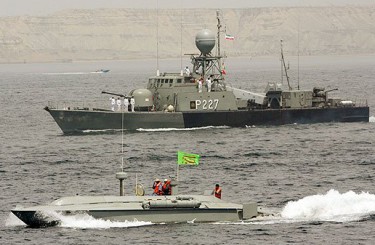
"The thirteen fleet of warships, comprised of Tonb and Delvar vessels is tasked with boosting security for Iranian merchant containers and oil tankers in the Gulf of Aden and north of the Indian Ocean for a period of 60 days," IRNA quoted Commander of Iran's First Naval Zone Fariborz Qaderpanah as saying on Thursday. 
The Iranian military commander also hailed the successful passage of the 12th fleet of warships through the Suez Canal and to the Mediterranean Sea in late January --the first ever journey following Iran's 1979 Islamic Revolution . 

"Over the course of the last two years, the Iranian fleet of warships has successfully managed to display its powerful presence in turmoil-stricken Gulf of Aden, and foil any attempt to impair transportation routes along the country's sea border" Qaderpanah added. 

The Iranian Navy has so far dispatched a number of military warships to the Gulf of Aden to guard Iranian and foreign vessels sailing in international waters. 

The Iranian Navy has been conducting anti-piracy patrols in the Gulf of Aden since November 2008, when Somali raiders hijacked the Iranian-chartered cargo ship MV Delight off the coast of Yemen. 

The Gulf of Aden -- which links the Indian Ocean with the Suez Canal and the Mediterranean Sea -- is an important energy corridor, particularly because the Persian Gulf oil is shipped to the West through the Suez Canal. 

According to US Department of Energy estimates, the water way is the quickest transit point for ships laden with some 3.3 million barrels of crude -- almost 4% of daily global demand. 

Wednesday, 23 February 2011

Iran’s naval warships enter Suez Canal first time in 3 decades


Iran's naval warships enter Suez Canal first time in 3 decades
Two Iranian naval warships entered the Suez Canal this Tuesday, en route to the Mediterranean. Israel, which views Iran as a threat, has already called the move a 'provocation'. Iranian officials say the frigate and supply vessel are headed to Syria for a year-long training mission. It's the first time Iran's military ships have sailed those waters since the country's Islamic revolution of 1979. Egypt's Defence ministry says Iran's request stated the vessels would have no military equipment or nuclear materials onboard.

Thursday, 17 February 2011

Iran deploys two warships to Mediterranean

Israeli Foreign Minister Avigdor Lieberman on Wednesday called the fact of two Iranian warships heading to the Mediterranean Sea through the Suez Canal a "provocation."
In a speech before the leaders U.S. Jewish organization in Jerusalem, Lieberman said that the two Iranian warships would pass through the Suez Canal overnight and then head to Syria, a country with which Israel is formally at war.
Lieberman referred that the deployment of the warships was "a provocation that proves Iran's nerve and self-esteem is growing from day to day."
According to Israel National News.com, Iran announced it has planned that the warships would be deployed near Israel and dock at a Syrian port for one year.
Iranian news agencies in January announced the beginning of the country's year-long drills that would deploy warships from the Red Sea to the Mediterranean Sea via the Suez Canal.

Tuesday, 15 February 2011

Syrian ports will accommodate Iranian warships


Israeli political and military leadership displayed a serious concern over reports of Iran's intentions to station its warships in Syrian ports, reported Iranian Navy's command. 

According to MIGnews, Iranian warships are about to reach the Mediterranean via the Red Sea and the Suez Canal and stay in Syrian territorial waters "for at least a year". Iran gradually expands military presence beyond zones of its direct national interests. Iranian task force has been actively operating off Yemen in the Aden Gulf for the recent two years. The excuse is "anti-piracy activities", but really Iran secures arms supply routes and supports its Shiah allies fighting against Yemeni and Saudi governments. 
Iranian Navy commander stated that expansion of Iran's operational area was the response on continuing presence of US and EU fleets in the Persian Gulf. Iran was irritated much by reports about France's plans to construct a naval base in United Arab Emirates. Iranian top-ranking naval officials said Iran "won't stand" any foreign navies near its coast and would take "adequate actions".

Friday, 11 February 2011

Commander Lauds Navy's Performance in Anti-Piracy Mission

TEHRAN (FNA)- Commander of Iran's Navy Rear Admiral Habibollah Sayyari praised his forces powerful and independent presence in the Gulf of Aden for anti-piracy mission.


"In the Gulf of Aden, 25 to 30 countries are busy patrolling to secure the shipping routes," Sayyari said, adding that while those navies are under NATO command, "the Islamic Republic of Iran is among the countries that work independently." 
Hailing the country's navy as the "strongest" and the best equipped and staffed force in the Persian Gulf and the Sea of Oman, he stressed that Iran and littoral states around the two bodies of water did not need outside help in safeguarding the region. 

The Iranian Navy has been conducting anti-piracy patrols in the Gulf of Aden since November 2008, when Somali raiders hijacked the Iranian-chartered cargo ship, MV Delight, off the coast of Yemen. 

According to UN Security Council resolutions, different countries can send their warships to the Gulf of Aden and coastal waters of Somalia against the pirates and even with prior notice to Somali government enter the territorial waters of that country in pursuit of Somali sea pirates. 

The Gulf of Aden - which links the Indian Ocean with the Suez Canal and the Mediterranean Sea - is an important energy corridor, particularly because Persian Gulf oil is shipped to the West via the Suez Canal. 

Thursday, 10 February 2011

Iran, Oman end 2nd joint naval drill


The Islamic Republic of Iran and Oman have ended their second joint naval relief and rescue drill in the north of Omani Sultan Qaboos Port.

Four Omani vessels, two fighter planes and one coastal helicopter as well as four Iranian surface vessels participated in the joint drill, Iran's Armed Forces Headquarters announced on Wednesday. 
The naval drill was aimed at enhancing readiness for providing relief services, rescue operations, and the level of regional cooperation and exchanging experience. 
The joint naval drill coincided with the ninth session of the five-day joint military conference which opened on February 5 in the Omani capital Muscat. 

Iran and Oman have agreed to carry out joint drill every year. 

Wednesday, 9 February 2011

Iran mass producing new anti-ship missiles


Iran is mass producing a new ballistic missile which can travel at more than three times the speed of sound and hit targets on the high seas, top commanders said on Monday.
Commander Mohammad Ali Jafari, who heads the elite military force, the Revolutionary Guards, said the missile -- named "Persian Gulf" -- had a range of 300 kilometres (185 miles).
"Iran is mass producing a smart ballistic missile for sea targets with a speed three times more than the speed of sound," state news agency IRNA quoted Jafari as saying about the new missile.
He said the missile was "undetectable and can't be neutralised by enemies," without specifying thename. "It has very high precision in destroying targets," Jafari added.

"As the enemy's threats will likely come from the sea, air and by missiles, the Guards have been equipped with capabilities to neutralise the enemy's advanced technology," he said, according to another Iranian news agency, ISNA.
Iran's missile and space programmes have sparked concern in the West that such advanced technologies, combined with the nuclear know-how which the nation is acquiring, may enable Tehran to produce an atomic weapon.
Tehran denies its nuclear programme has military aims.
The new missile can be fired "from surface ballistically and can hit enemy vessels from a high altitude," Amir Ali Hajizadeh, head of the Guards' air force wing told Fars news agency.
"The missile is named Persian Gulf...its warhead will carry 650 kilogrammes of explosives," he said, adding that the missile was powered by solid fuel and designed by the Guards.
Footage on state television showed the missile being fired atop a mobile launcher from a desert terrain.
The announcement of the new missile comes as Iran holds celebrations to mark the 32nd anniversary of its Islamic revolution which toppled the US-backed shah.
Iran uses the run-up to the February 11 anniversary to tout its scientific and technological achievements.
In a separate function, Iran unveiled four new home-built satellites and engines of a rocket.
Meanwhile the head of naval Guards' naval forces, Ali Fadavi, issued a warning that Iran will hit back if itcame under attack.
"The Islamic republic has the ability of blocking the Strait of Hormuz if threatened," Fadavi told Mehr news agency.
"We will deliver a very firm response if any powers do the slightest thing to hurt the security of the region."
Iranian military officials regularly warn of blocking the Strait of Hormuz -- the route through which 40 percent of world's oil supply by sea passes -- in case Iran comes under attack.
The United States and Israel have never ruled out the option of military strikes against Iran to stop its nuclear programme.

Monday, 7 February 2011

DM Stresses Key Role of Speedboats in Iran's Naval Doctrine

TEHRAN (FNA)- Iran's Defense Minister Brigadier General Ahmad Vahidi underlined that use of speedboats is at the heart of the Iranian Navy's operational doctrine since high-speed vessels have already proved highly efficient in fighting back US heavyweight warships.


Addressing a conference at Amir Kabir University of Technology here in Tehran today, Vahidi recalled the history of using speedboats for confronting US aircraft carriers, heavy warships and submarines, and noted, "Speedboats proved so successful that they led to the formation of the IRGC (the Islamic Revolution Guards Corps) naval force." 

"The accomplishment also led to major changes in doctrines in different fields," he added.

"This significant event has abundant lessons and implications in strategic, operational, tactical and industrial areas and also in research and innovation," he continued. 

"The issue of high-speed vessels has now turned into a crucially important topic in the world, while it is a very efficient, effective and low-cost operational doctrine for us," Vahidi noted. 

He further announced that Iran is now capable of manufacturing speedboats which can traverse at 60 to 70 knots per hour, yet the country is still seeking to increase the speed of these vessels to 80, 90 and even 100 knots per hour. 

In August, the IRGC launched tens of its missile-launching speedboats in the Persian Gulf. 

The speedboats in Zolfaqar, Tareq, Ashoura and Zoljanah classes were launched in a ceremony attended by Admiral Fadavi and a number of other high-ranking officials. 

The Islamic Republic has mass-produced a large number of speedboats with rocket- launchers and other sophisticated military equipment which are able to strike a heavy blow at any foreign warship if the country comes under attack. 

Also the IRGC has earlier announced that it is ready to deploy its submarines and combat boats to intercept vessels in the Strait of Hormuz. 

The IRGC is responsible for the security of the Persian Gulf. In 2008, Major General Yahya Rahim Safavi, former commander of the IRGC and the current military advisor to the Supreme Leader of the Islamic Revolution, declared that the responsibility for defending the Persian Gulf had been handed over to the IRGC. 

He warned that the IRGC would seal the strategic Strait of Hormuz in case the US launches any attack on Iran's nuclear installations. 

Iran Mass Producing New Anti-Ship Missiles


TEHRAN - Iran is mass producing a new ballistic missile that can travel at more than three times the speed of sound and hit targets on the high seas, top commanders said on Feb. 7.
Cmdr. Mohammad Ali Jafari, who heads the elite military force, the Revolutionary Guards, said the missile - named "Persian Gulf" - had a range of 300 kilometers.
"Iran is mass producing a smart ballistic missile for sea targets with a speed three times more than the speed of sound," state news agency IRNA quoted Jafari as saying about the new missile.
He said the missile was "undetectable and can't be neutralized by enemies," without specifying the name. "It has very high precision in destroying targets," Jafari added.
"As the enemy's threats will likely come from the sea, air and by missiles, the Guards have been equipped with capabilities to neutralize the enemy's advanced technology," he said, according to another Iranian news agency, ISNA.

Iran's missile and space programs have sparked concern in the West that such advanced technologies, combined with the nuclear know-how which the nation is acquiring, may enable Tehran to produce an atomic weapon.
Tehran denies its nuclear program has military aims.
The new missile can be fired "from surface ballistically and can hit enemy vessels from a high altitude," Amir Ali Hajizadeh, head of the Guards' air force wing told Fars news agency.
"The missile is named Persian Gulf ... its warhead will carry 650 kilograms of explosives," he said, adding that the missile was powered by solid fuel and designed by the Guards.
Footage on state television showed the missile being fired atop a mobile launcher from a desert terrain.
The announcement of the new missile comes as Iran holds celebrations to mark the 32nd anniversary of its Islamic revolution that toppled the U.S.-backed shah.
Iran uses the run-up to the Feb. 11 anniversary to tout its scientific and technological achievements.
In a separate function, Iran unveiled four new home-built satellites and engines of a rocket.
Meanwhile the head of naval Guards' naval forces, Ali Fadavi, issued a warning that Iran will hit back if it came under attack.
"The Islamic republic has the ability of blocking the Strait of Hormuz if threatened," Fadavi told Mehr news agency.
"We will deliver a very firm response if any powers do the slightest thing to hurt the security of the region."
Iranian military officials regularly warn of blocking the Strait of Hormuz - the route through which 40 percent of world's oil supply by sea passes - in case Iran comes under attack.
The U.S. and Israel have never ruled out the option of military strikes against Iran to stop its nuclear program.

Sunday, 6 February 2011

Iran Navy saves Hong Konger ship


The naval forces of the Islamic Republic of Iran have thwarted an attempt by pirates to seize a Hong Konger commercial ship in the Red Sea.

The VRYK3 with 32 crewmembers, which was headed from Italy to Australia, was attacked by pirates on Saturday. 

In response to the distress call, Iran's 12th fleet came to the vessel's rescue. The pirates fled the scene following the clash with the Iranian forces and the ship continued on its way. 

In line with international efforts against piracy, the Iranian Navy has been conducting anti-piracy patrols in the Gulf of Aden since November 2008 to safeguard maritime trade and in particular ships and oil tankers owned or leased by Iran. 

Over the past years and despite patrols by the European Union, NATO and several other countries, Somali pirates have hijacking dozens of ships, making tens of millions of dollars in ransom. 

The tenth Iranian fleet along with two destroyers has been dispatched to the Gulf of Aden. 

Iran's ninth fleet along with two destroyers was dispatched to the Gulf of Aden three months ago with the objective of protecting Iranian commercial vessels against Somali pirates. 

Iran also plans to dispatch another fleet to the Red and Mediterranean Seas in the near future in order to expand its presence in international waters. 

Iran, Oman begin 2nd joint naval drill


Iranian naval vessel units departed the country's southern coast for Oman as the two countries prepare to hold their second joint military drill.


According to a statement released by the Iranian Navy, the joint naval exercises coincide with the ninth session of the joint military committee in the Omani capital city, Muscat. 

Last month, Deputy Commander of Iran's Islamic Revolution Guards Corps (IRGC) Brigadier General Hossein Salami said Iranian and Omani armed forces would exchange views on common issues during the five-day conference which opened on February 5. 

He noted that the two countries drew plans for the next year, including exchanging visits between commanders, holding educational courses, staging joint marine maneuvers and expanding educational cooperation. 

The Iranian commander pointed to “very good” marine cooperation between the two countries and stressed the importance of promoting closer relations between Iran and Oman, as two Muslim countries located near the strategic Strait of Hormuz.