Infolinks In Text Ads

Showing posts with label U.S navy. Show all posts

Sunday, 27 February 2011

US Regulators State Refusal To Restart Drilling Despite Political Pressure


Interior Secretary Ken Salazar said that U.S. regulators would not bow to political pressure to restart deepwater drilling in the Gulf of Mexico before they are certain the oil-and-gas industry is capable of containing an oil spill like the one that followed last BP’s Deepwater Horizon disaster.
Salazar and Michael Bromwich–the head of the U.S. Bureau of Ocean Energy Management, Regulation and Enforcement, which oversees offshore drilling–were in Houston Friday to meet with oil industry executives to assess the spill-containment systems they have developed in the wake of nation’s worst-ever marine oil spill.
Bromwich said he was “quite confident that we are getting very close to the point where we can begin issuing deepwater permits.” But he and Salazar said the industry still has work to do before exploration of the Gulf’s deepest waters can resume.
The U.S. government shut down deepwater drilling shortly after the Deepwater Horizon exploded on April 20, killing 11 and unleashing a catastrophic oil spill.
The government’s official ban was lifted in October, but regulators have yet to allow drilling to resume in water deeper than 500 feet despite mounting political pressure from congressional Republicans and Gulf Coast Democrats to reopen one of the nation’s primary energy fields.
“We don’t respond to political pressure,” Salazar said. “We are frankly doing what’s right for America’s energy program.”
Both Helix Energy Solutions Group, whose system helped stem the flow of BP’s runaway well last summer, and the nonprofit Marine Well Containment Co., formed by a consortium of major oil companies, say their systems are ready to respond to spills on par with Deepwater Horizon. But the nation’s top energy regulators said that they felt differently.
“These containment systems are work in progress,” Salazar told reporters after the meetings. “Both systems currently have limitations on water depth and barrel-per-day containment capability.”
The Marine Well Containment Co. was formed by Exxon Mobil, Chevron, ConocoPhillips and Shell last July. The consortium said last week that its containment system was ready for deployment and could respond within 24 hours of an offshore spill and capture up to 60,000 barrels of oil per day at depths up to 8,000 feet.
The Helix system is capable of capturing oil at depths up to 5,600 feet, and the company said it hopes to extend that reach to 8,000 feet by late March. The Houston company said last month that it has signed an agreement with nonprofit spill-response consortium Clean Gulf Associates to make its containment system available for two years to the group’s members in exchange for a retainer fee. Helix also said it has day-rate agreements with 19 of the group’s member companies.
While the containment systems are aimed at stopping gushing wells up to 8,000 feet below the surface, drillers have gone on a buying binge in recent months, ordering rigs that can drill at depths of 10,000 feet and 12,000 feet–twice the depth at which the Deepwater Horizon was drilling when it exploded.
Since the end of September, seven companies have ordered 11 so-called ultra-deepwater rigs. Along with those firm orders, eight companies have disclosed options for 14 more such vessels.
So far five applications for deepwater drilling permits have been filed. Bromwich offered no prediction of when any permits might be issued, but he indicated that wells planned for depths within reach of the containment systems may soon be allowed.
A federal judge in New Orleans last week ordered Salazar’s department to decide within 30 days whether to grant permits for those projects. In his ruling, part of a suit brought by London-based driller Ensco PLC ADS (ESV), U.S. District Judge Martin Feldman said that the administration’s inaction is “increasingly inexcusable.”

Wednesday, 23 February 2011

Chevron Sees US Deepwater Drilling Resuming By Midyear


MIDLAND, Texas (Dow Jones)–Chevron Corp. (CVX), the second-largest U.S. oil company, expects to be able to resume its ambitious drilling program in the deep waters of Gulf of Mexico before the first half of 2011 is over, company executives said Wednesday.
“We are getting at the end of the road,” Gary Luquette, Chevron’s head for exploration and production in North America, said. “One time we thought it will be the end of the year, now our estimate is that it could be before the middle of the year.”
The first Chevron wells that are expected to receive permits are Buckskin, an appraisal well, and Moccasin, an exploration well. Both were suspended when the Obama administration enacted a moratorium on deepwater drilling last year, after the Deepwater Horizon explosion and oil spill.
The industry’s hopes for a return to deepwater activities were raised by the announcement last week of an operational system to contain possible oil spills. U.S. regulators have said the lack of a response system had been one of the main reasons they hadn’t approved any new permits, despite the official end of the drilling moratorium last October.
Drilling in the Gulf is critical to the growth plans of Chevron, which, like other large integrated oil companies, constantly struggles to find enough oil to keep its large production going. Central Asia and Australia are also critical to Chevron’s growth.
Chevron Vice Chairman George Kirkland, speaking along with Luquette in an interview with Dow Jones Newswires, said Chevron is ready to move forward with plans to intensify production at the massive Tengiz oilfield in Kazakhstan. “Our view is that we can do another expansion that is about 250,000 to 300,000 barrels of oil a day,” said Kirkland, who leads the company’s global oil and gas segment. “We are ready to move” into front engineering and design “some time this year.”
Kirkland said the company is confident on moving forward because last year an expansion of the Caspian pipeline moved into its engineering and design stage.
The company is also betting on Australia’s natural gas reaches through investment in the massive Gorgon liquefied natural gas project. Chevron will announce the timing of a decision to move forward on the project’s expansion at its analyst meeting in March, Kirkland said. “We believe we already have found enough gas for an expansion trend in Gorgon,” Kirkland said.
Kirkland added that Chevron still expects to increase 2011 production by 1% to about 2.79 million barrels of oil equivalent, despite concerns that higher oil prices could affect the company’s production due to its production-sharing contracts. Some of Chevron’s contracts with national oil companies specify that if the price of oil rises, Chevron’s share of a project’s output falls. “We are holding our production guidance for 2011,” Kirkland said.
Kirkland also said that the price of West Texas Intermediate crude, the benchmark for U.S. oil prices, doesn’t really reflect global prices. The crude has been trading at a sharp discount to Brent, the global benchmark, due to a glut of WTI at the site where the crude is delivered and stored, near Cushing, Okla. The discount widened to as much as $19 a barrel in recent weeks, but Kirkland said it’s not going to be a “long-term problem.” Luquette said the differential between WTI and Brent will narrow with the expansion of the Keystone pipeline, which is due to become operational in 2014.

5th Fleet News Brief: Vice Admiral Fox discusses piracy aboard S/V Quest


DOD News Briefing with Vice Adm. Fox via Telephone from Bahrain on Somali Piracy Aboard the S/V Quest
COL. DAVID LAPAN (Deputy Assistant Secretary of Defense for Media Operations):  Admiral Fox, it’s Colonel Dave Lapan here at the Pentagon.  How do you hear me?
ADM. FOX:  I hear you loud and clear; how me?
COL. LAPAN:  Okay, sir, we have you loud and clear.
Good morning, all, here at the Pentagon.  And good afternoon to Admiral Fox in Bahrain, we have with us today to talk to you briefly about the incident involving the Sailing Vessel (S/V) Quest.  Vice Admiral Mark Fox is the commander of U.S. Naval Forces Central Command.  He also serves as commander of the U.S. Navy 5th Fleet and commander of the Combined Maritime Force.

U.S. Admiral Provides Details of Somali Piracy Killings


WASHINGTON | Four pirates are dead and 15 are in custody, but not before they killed four Americans in the bloodiest piracy incident in recent history, the commander of U.S. Naval Forces Central Command told reporters in a conference call yesterday.

Navy Vice Adm. Mark I. Fox, who also commands the Navy’s 5th Fleet, said the pirates shot Scott and Jean Adams of California and Phyllis Mackay and Bob Riggle of Washington state. The surface vessel Quest was sailing around the world when the Somalis hijacked it off the coast of Oman.

White House Press Secretary Jay Carney told reporters on Air Force One that President Barack Obama authorized the use of force if there was an imminent threat to the hostages. He said the president was informed of their deaths at 4:42 this morning.
“The loss of our fellow Americans is a tragedy,” Fox said from his headquarters in Manama, Bahrain.

The admiral gave a timeline of the action. Pirates captured the vessel about 190 nautical miles southeast of Masirah Island, Oman, Feb. 18. Four U.S. Navy warships responded: the aircraft carrier USS Enterprise, the guided-missile cruiser USS Leyte Gulf and the guided-missile destroyers USS Sterett and USS Bulkeley.

The ships found the vessel and made contact with the pirates via bridge-to-bridge radio, and began a series of negotiations. Yesterday, two pirates boarded the USS Sterett to continue negotiations.

“At 8 a.m. this morning … a rocket-propelled grenade was fired by the pirates from the Quest toward the Sterett,” Fox said. “Immediately thereafter, gunfire erupted from inside the cabin of the Quest. Several pirates appeared on the deck of the Quest and moved up to the bow with their hands in the air in surrender.”

U.S. special operations forces closed in on the Quest in small boats and boarded the yacht. “They discovered that all four hostages had been shot by their captors,” Fox said. The service members took immediate steps to provide medical care, but the four Americans died of their wounds. The boarding party also found two dead pirates aboard the vessel.

The special operations forces did not fire weapons during the boarding, Fox said.

“While clearing the vessel, two additional pirates were killed,” the admiral said. “The remaining 15 suspected pirates are in U.S. custody.”

Fox said two additional pirates were killed as the special operators cleared the boat. One was killed with a pistol, the other in a knife fight, the admiral said. There were no casualties to service members or damage to Navy ships. The Navy and the FBI are investigating the incident.

Fox said the perpetrators will be brought to justice.

Tuesday, 22 February 2011

Egypt to build four Swiftships


An Egyptian shipyard is to assemble two 28-metre Swiftships patrol craft and co-produce two more under a US$20 million contract modification to a Foreign Military Sales Programme purchase approved earlier this month. 

Swiftships Shipbuilders of Morgan City, Louisiana, is being paid US$20 221 529 to design and construct the four coastal patrol craft (CPC). The contract also cover associated crew familiarisation training and technical services for the Egyptian Navy. 
The US Department of Defence in a February 11 notice said the award modifies previously awarded contract N00024-09-C-2210.This was a firm-fixed price contract for the design and construction of two 28-metre CPCs for Egypt at a cost of US$13 414 450. These were to have been built in Louisiana with a delivery date of May 2010.The new contract sees the number of CPC doubled and some 25% of the work transferred to an Egyptian workforce at an unspecified yard at Alexandria in the Nile delta. Construction is now expected to be complete by February 2014. 

The authoratative London-based International Institute for Strategic Studies (IISS) says in its 2010 Military Balance publication that the Egptian Coast Guard, part of the Egyptian Navy, already operates nine Swiftships. 

February 2009 news reports noted that Swiftships had also been contracted to build 25 26-metre patrol craft for the Egyptian Navy. The Swiftships model 25MPB0500 Swift Protector is a twin waterjet, diesel-powered all welded aluminium alloy patrol boat. The IISS notes at least six have already been delivered to the Coast Guard. The boats were designed to control emergency situations in local zones; support Navy and Coast Guard security operations; control sea-lanes; conduct Coast Guard, police and customs law enforcement for controlling economic zones; as well as search and rescue missions.

Pirates kill four US hostages near Somalia


Pirates shot dead four US hostages on a private yacht, the deadliest incident involving Americans kidnapped for ransom in the increasingly dangerous waters off Somalia.


The US military said the pirates shot the hostages before American special forces boarded the vessel.

US troops killed two pirates as they took control of the the boat, and took 15 pirates into custody. Another two pirates were found dead when the US special forces arrived but they were not killed by US forces, the military said, Reuters reports.
Secretary of State Hillary Clinton said the US government was "deeply saddened and very upset by the murder of four American citizens" -- a "deplorable act" that underscored the need for more international cooperation against the pirates.

"We've got to have a more effective approach to maintaining security on the seas, in the ocean lanes, that are so essential to commerce and travel," she told reporters.

Pirate gangs preying on shipping lanes through the Gulf of Aden and the Indian Ocean typically target large merchant ships, with oil tankers the prize catch, but the snatching of foreigners can also yield high ransoms. There were around 750 pirate hostages at the end of January.

The Americans killed on Tuesday were Jean and Scott Adam, from California, as well as Phyllis Macay and Bob Riggle from Seattle.

The US military said negotiations with the pirates had been under way when on Tuesday morning, without warning, a pirate fired a rocket-propelled grenade at the guided-missile destroyer USS Sterett.

Then gunfire broke out inside the pirated vessel.

"The intent always had been that this would be a negotiated process and not ever go into a point where we actually had gunfire," said Vice Admiral Mark Fox, the head of US naval forces in the turbulent region.

President Barack Obama had authorized the use of force in the case of an imminent threat to the hostages, White House press secretary Jay Carney told reporters.

In Seattle, people who knew Riggle, who was in his late 60s, said he was a retired veterinarian who had worked under contract for the Seattle Animal Shelter.

"He was a very nice, compassionate individual. He had a way with animals. He treated people with dignity and respect," said Dan Jordan, the director of the shelter.

Jordan said Riggle seemed well-suited to his companion, Macay. "He was a man of few words, and she was a woman of many words," he said.

REVENGE

In April 2009, U.S. Navy special forces freed the captain of the U.S.-flagged Maersk Alabama by killing three Somali pirates who held him hostage in a lifeboat. Obama had authorized the use of force in that incident as well.

The one surviving pirate from the Maersk incident has been sentenced to 33 years and nine months in prison in a federal court in New York.

Two Somali pirates who spoke with Reuters by telephone on Tuesday said the hostages were ordered killed since the pirates themselves were under attack by US forces.

"Our colleagues called us this morning, that they were being attacked by a US warship," Mohamud, a Somali pirate, told Reuters. "We ordered our comrades to kill the four Americans before they got killed."

Pirate leader Farah, speaking from Bayla, a pirate haven in the semi-autonomous region of Puntland in northern Somalia, vowed to avenge the deaths and capture of his comrades.

"I lost the money I invested and my comrades. No forgiveness for the Americans. Revenge. Our business will go on," he said, adding he had spent US$110 000 so far in the hijacking, including on weapons and food and salaries.

U.S. Forces Respond to Gunfire Aboard S/V Quest


TAMPA, Fla. (NNS) — At approximately 1 a.m. EST today, while negotiations were ongoing to secure the release of four American hostages, U.S. forces responded to gunfire aboard the pirated vessel (S/V) Quest.
As they responded to the gunfire, reaching and boarding the Quest, the forces discovered all four hostages had been shot by their captors. Despite immediate steps to provide life-saving care, all four hostages ultimately died of their wounds.
“We express our deepest condolences for the innocent lives callously lost aboard the Quest,” said Gen James N. Mattis, U.S. Central Command Commander.
During the boarding of the Quest, the reaction force was engaged by pirates on board the vessel. Two pirates died during the confrontation and 13 were captured and detained along with two pirates already in US Forces custody. The US Forces also found the remains of two other pirates already dead aboard the Quest. In total, it is believed 19 pirates were involved in the hijacking of the S/V Quest.
US Forces have been closely monitoring the S/V Quest for approximately 3 days, once it became known to be pirated. Four U.S. Navy warships comprised the response force dedicated to recovering the S/V Quest: the aircraft carrier USS Enterprise (CVN 65), the guided-missile cruiser USS Leyte Gulf (CG 55), the guided-missile destroyers USS Sterett (DDG 104) and USS Bulkeley (DDG 84). The ships are deployed to the region to conduct maritime security operations and to provide support to operations Enduring Freedom and New Dawn.

U.S. Admiral Says China’s “Carrier Killer” Missile Won’t Alter Navy’s Asia Stance


It’s been called the “Carrier Killer” for its supposed ability to be launched from hundred of miles away and quickly destroy the largest vessel in the U.S. Navy fleet before defense maneuvers can be employed.
In fact, defense experts have suggested that the capability of China’s new Dong Feng 21D missile is so imposing that it could swing the balance of power in Asia from the United States — whose aircraft carrier battle groups have ruled the sea since the end of World War II — to a Chinese military that has spent many years aggressively modernizing its fighting abilities and developing high-tech weaponry.

According to the Associated Press, military experts consider the DF-21D missile “a key component of China’s strategy of denying U.S. planes and ships access to waters off its coast.” The strategy includes “overlapping layers of air defense systems, naval assets such as submarines, and advanced ballistic missile systems — all woven together with a network of satellites.”
Patrick Cronin, director of the Asia-Pacific Security Program at the Center for a New American Security, said that China’s “emerging Chinese anti-ship missile capability, and in particular the DF-21D, represents the first post-Cold War capability that is both potentially capable of stopping our naval power projection — and deliberately designed for that purpose.”

But as reported by the AP, Vice Admiral Scott van Buskirk, commander of the U.S. 7th Fleet, “does not see the much-feared weapon as creating any insurmountable vulnerability for the U.S. carriers — the Navy’s crown jewels.”

Van Buskirk told the AP that the missile, which China’s Global Times said boasts a firing range of between 1,800 and 2,800 kilometers and has already been deployed by China’s army, does not represent “the Achilles heel of our aircraft carriers or our Navy,” but is merely “one weapons system, one technology that is out there.”

Some defense analysts believe the missile could have the capability of hitting a well-defended target — such as Admiral van Buskirk’s own USS George Washington — with pinpoint accuracy. “The missile would penetrate defenses because its speed from launch would not allow enough time for carriers or other large ships to complete countermeasures,” reported the AP. “That could seriously weaken Washington’s ability to intervene in any potential conflict over Taiwan or North Korea, as well as deny U.S. ships safe access to international waters near China’s 11,200 mile-long coastline.”

While van Buskirk conceded that the new technology has become a point of concern in America’s defense posture, he noted that the misssile’s capability has yet to be proven, and is but one of many potential “game changers” that military experts have pointed to over the years:

If there wasn’t this to point to as a game changer, there would be something else. That term has been bandied about for many things. I think it really depends on how you define the game, whether it really changes it or not.
China itself appears to think it may be gaining an edge in the region. In April 2010 it sent a flotilla of 10 warships through an area of the East China Sea where Japan claims several islands and where U.S. Navy vessels regularly patrol, passing through Japan’s Miyako Strait without informing Tokyo of its intentions. That military muscle flexing, along with Beijing’s warning against U.S. carrier operations off the coast of the Korean Peninsula, add up to what military experts say is an example of China’s “testing of the waters” as it continues to develop its long-term strategy for exerting control in the region.

Nonetheless, the U.S. has no plans to alter its mission, “and will continue to operate in the seas around Japan, Korea, the Philippines and anywhere else it deems necessary,” reported the AP. “We won’t change these operations because of this specific technology that might be out there,” said van Buskirk. “But we will carefully monitor and adapt to it.”

While the technology seems intimidating and a real threat to U.S. naval presence in Asia, Toshi Yoshihara, an associate professor at the U.S. Naval War College, was quoted by FOX News as explaining that China must still perfect a range of complex technologies to make the missile do what experts say it is designed to achieve: zoom in at 10 times the speed of sound and destroy a large aircraft carrier moving through an unending seascape.

“There would be several layers of sensors, including over-the-horizon radar, which would help track surface units,” Yoshihara conceded. “They also have airborne sensors to look out into the Pacific, as well as space-based satellites to track a strike group.”

But how long will it be before China has perfected the missile’s accuracy and is able to pose a threat to America’s carrier fleets prowling the Pacific Ocean? “This is probably one of the biggest mysteries,” Yoshihara told FOX. “My quick answer is we don’t know.”

While a carrier is a huge target, it would be “operating in the vast expanse of the Pacific,” explained Yoshihara. “Besides, we’re talking about a warhead falling onto the earth at 10 times the speed of sound. How do you guide it in pinpoint fashion?”

Meanwhile, the United States is not merely standing idly by while China ramps up its capabilities, but is “investing in missile-defense systems designed specifically to defend against anti-ship ballistic missiles,” Yoshihara said.

Yoshihara noted, however, that any technology empowering China to threaten U.S. Navy ships at sea would make other targets vulnerable as well. “If those missiles can reach carriers in the open ocean, they can target critical naval bases all along the Pacific Rim,” Yoshihara told FOX. “That challenges the basic principle of American power projections in the Far East.”

To add to the complexity of the situation, China’s Global Times recently reported that in addition to the “carrier killer” missile, the Chinese army “is researching a new type of conventional missile that is set to be weaponized and entered into active service within five years….”

According to the report, China’s largest weapons manufacturer, the China Aerospace Science and Industry Corporation, is set “to complete research, production and delivery of this new generation of missile by 2015. The new missile would be part of a network forming a solid defense system allowing for total coverage in both defense and attack, and capable of dealing with various threats from land, sea, air, space as well as cybernetic attacks….”


Monday, 21 February 2011

US military to boost naval fleet in Asia


A top US naval commander said Monday that Washington plans to boost its military presence in Asia, while warning that China should expand its own forces in a "responsible and constructive" way.
The United States has expressed concerns about Beijing's military build up, with the Pentagon saying this month that China was developing "counter-space" weapons that could shoot down satellites or jam signals.

Beijing has become increasingly assertive in its ambitions on the high seas in recent years with plans to roll out its first aircraft carrier as the centerpiece in the emerging power's growing naval fleet.
The former Soviet aircraft carrier called the Varyag is currently being refurbished in the port city of Dalian in northeast China.
Speaking in Hong Kong on Monday Vice Admiral Scott Van Buskirk, commander of the US 7th fleet, said that the carrier "may come as early as this year," but did not elaborate or say whether it would be fully operational.
"It is our sincere hope that as China continues to develop a blue-water navy -- one which may soon include an aircraft carrier -- it will employ that navy in a way that is responsible and constructive," he added during a luncheon speech in Hong Kong.
Van Buskirk dismissed suggestions the US would cut its military presence in the region, saying there were an average of 70 US naval ships and aircraft operating in Asia daily, up from 50 to 60 a decade ago.
"Some worry that the US -- with our sluggish economy and continued military engagement in Afghanistan -- is weakening its position and its commitment to Asia," he said.
"I can tell you that our commitment to this region has never been stronger."
The naval commander also warned that the rash of sea piracy plaguing the coast of Africa was spreading eastward to southern India.
"Despite, or perhaps because of, the coordinated international efforts to fight piracy in the Gulf of Aden, we have seen the problem slowly creeping to the east into the Indian Ocean," Van Buskirk said.
"No one country can fight piracy alone," he added.
Last week, US Navy Admiral Robert Willard warned that Somali pirates were moving deeper into Asian waters amid international efforts to clamp down on the problem.

DNV recommends LNG fuel shipping for North America


Houston: “Domestic ships in North America have three options to meet new emissions control regulations; install CO2 scrubbers, burn low sulphur fuel or switch to LNG fuel for the ship’s propulsion,” says Kenneth Vareide, director of operations for DNV North America Maritime.
DNV’s new report, Greener shipping in North America, proposes that LNG l is the most efficicient and economical way to meet air emissions requirements in the US and Canada that take effect in August 2012. Environmental Control Areas (ECA) will gradually be enforced along the North American coastlines. They will have full force in 2015 and 2016, leaving shipowners a limited number of options for modifications to their ships if they want to continue trade in North America.
Says Kenneth Vareide, “A LNG fuelled propulsion plant may add about $3.6 million to the cost of a typical domestic cargoship, however, over the operating life of the vessel, at today’s gas rates, LNG fuel would save more than $4 million over CO2 scrubbers and $12 million for low sulphur fuel.”
Specifically, the use of LNG fuel for a ship would reduce nitrous oxide (NOx) emissions by 85-90%, sulphur dioxide (SO2) and particulate matter by almost 100%, and it would result in 15-20% less greenhouse gas emissions.

Best and most cost-efficient
DNV’s report is the first study of US and Canadian domestic shipping and recommendations to meet new environmental legislation for North America. The report says that implementing LNG fuel on a significant portion of the fleet is the best and most cost-efficient solution for reducing environmental emissions in North America.

LNG is particularly an attractive alternative for vessels with a fixed trading pattern, which should fit well with the biggest segments; ferries, offshore support vessels and tug/push boats. Besides, much of the coastal trade in the US is fixed in its trade pattern and we have been in contact with several companies that are considering LNG for newbuildings and conversions,” says Kenneth Vareide.

York sails south to replace her sister


GLIDING past Round Tower, this is the sight of a stretched Type 42 destroyer, HMS York to be precise, sailing on deployment.
D98 (where life is great, according to the matelot's adage) is bound for the Falklands to relieve her sister.
Britain’s fastest destroyer (34kts) is due in the Falklands in the middle of next month, allowing her sister Gloucester to head home.
The Type 42 will spend a few months in and around the Falklands and South Georgia, returning to Portsmouth in July via the Caribbean and finally the USA.
To ready York for the deployment south again (her previous tour of duty over the Austral summer of 2009-10 was also to the Falklands), the ship has received  two new gas turbines and she has loosed no fewer than seven Sea Dart missiles on the ranges off the Outer Hebrides to prove her main weapon system was fully functioning.
“We’ve been preparing hard for this deployment and I’m delighted with my ship’s company’s response to the training,” said Commanding Officer Cdr Simon Staley.
“Our families deserve a very special mention – and thanks – too. They have been the very cornerstone of strength for us all throughout a hugely-demanding period of regeneration.
“By sheer distance from the UK – and in the face of a harsh South Atlantic winter – the deployment will present some real challenges for us all, but this will be balanced by the visits to some wonderfully diverse countries.”

Boeing EA-18G Growlers Deployed by US Navy


Boeing today announced that EA-18G Growler airborne electronic attack aircraft have been deployed for the first time by the U.S. Navy.
"The men and women of Boeing are honored to see this new capability directly benefit the nation’s brave service members around the world," said Kory Mathews, vice president of F/A-18 and EA-18 programs for Boeing. "The airborne electronic attack capability that the EA-18G brings to the fight is in high demand, so we are comitted to continuing to deliver these aircraft to the Navy on budget and on schedule , just as we have with every F/A-18E/F."

The EA-18G is the only air combat platform that delivers full-spectrum airborne electronic attack (AEA) capability along with the targeting and self-defense capabilities derived from the Navy's frontline fighter, the F/A-18E/F Block II Super Hornet. A derivative of the two-seat F/A-18F Block II, the EA-18G's highly flexible design enables warfighters to operate either from the deck of an aircraft carrier or from land-based airfields. It is replacing the Navy's current AEA platform, the EA-6B Prowler, which has been in service since 1971. The EA-18G joined the Navy's aircraft fleet in 2008, when it was introduced to fleet training squadron VAQ-129.
Boeing, acting as the weapon system integrator and prime contractor, leads the EA-18G Growler industry team, which also includes Northrop Grumman, Raytheon and General Electric Aircraft Engines.

Friday, 18 February 2011

SA sub exercises with US frigate


The Heroine-class submarine SAS Charlotte Maxeke (S-102) has exercises with the US Oliver Hazard Perry-class frigate USS Stephen W. Groves (FFG 29) off the South African coast. 


The US Africa Command (AFRICOM) says on its website the exercise, last week, was part of a series of joint-training operations between South African and US navies. Commander Matthew Rick, commanding officer of the Stephen W. Groves, told the AFRICOM news service that the exercise allowed his crew to test their ability to deal with real-life situations they might face during their military career.


"Training with another nation's vessel allows the crew to execute in real time," said Rick. "We train constantly using simulations, but having an actual submarine to train with provides hands-on experience that is unmatched in anything we can do while independent steaming. Combine that with the chance to work with the South African Navy and it was a win-win situation for both crews and nations."


The exercise focused on close quarters maneuvering which allowed watch standers to train in vessel avoidance and contact management. "It is extremely rare to have the opportunity to train with a foreign navy's warship," said South African Navy Commander Darren White, commanding officer Charlotte Maxeke. "We met every objective, and were impressed with the precision with which the crew of Stephen W. Groves handled this exercise." 


Two Stephen W. Groves sailors, Lieutenant Shane Collins and Ensign Daniel Stayton, had the unique opportunity to spend two days embarked aboard Charlotte Maxeke. "It was really impressive to see the professionalism and efficiency with which Commander White's crew went about their operations," said Collins. "They were great hosts, and the whole experience is one I will treasure."

"The crew of the Charlotte Maxeke brought us on board and helped us feel right at home," said Stayton. "I had a great time and walked away immensely impressed with the type of operational tempo and command climate they have aboard." Stephen W. Groves also hosted numerous ship riders from the Charlotte Maxeke. This training was part of the US Navy's initiative to strengthen military partnership nations throughout the continent of Africa, AFRICOM added.

Thursday, 17 February 2011

MARAD Awards Contracts for $77 Million to Crew and Maintain National Defense Reserve Fleet Ships


WASHINGTON – U.S. Transportation Secretary Ray LaHood today announced contracts totaling $77 million for three U.S. maritime firms to operate 10 National Defense Reserve Fleet ships through July 27, 2015.
“This money will help make sure these important Defense Reserve Fleet ships are manned with skilled mariners and are ready when our Nation calls,” said Secretary LaHood.
The contracts were awarded to Ocean Duchess Inc. of Houston, Texas for $16,618,430; Keystone Ocean Shipping of Bala Cynwyd, Pa. for $30,212,588; and Interocean American Shipping Corporation of Moorestown, N.J. for $30,533,710. These companies are responsible for maintaining the ships in good mechanical condition and ensuring crews are available for their operation when needed.
Eight of the ships are reserve-status cargo ships, part of the Department of Transportation’s Ready Reserve Force, and two ships are used to assist Missile Defense Agency operations. Ready Reserve Force ships have been activated 91 times since 2002.
“Missions in Haiti, Iraq, and Afghanistan, as well as rescue efforts following Hurricanes Katrina and Rita, show the need for a prepared and ready-to-act fleet of ships,” said Maritime Administrator David T. Matsuda. “We rely on the U.S. merchant mariners for the day-to-day operation of these reserve duty and special-mission ships.”
The money was awarded to the companies which offered the best value to the government and was funded through Department of Defense funding and implemented by MARAD under the Ready Reserve Force program.

Exxon-Led Consortium: Oil Spill Response System Ready To Deploy


HOUSTON (Dow Jones)–A consortium of oil giants led by Exxon Mobil Corp. (XOM) said Thursday that an early version of its containment system for deepwater oil spills is ready for deployment, potentially paving the way for resumption of deepwater drilling in the U.S. Gulf of Mexico.
The consortium said the system will be ready to deploy within 24 hours of a spill and will be able to capture up to 60,000 barrels of oil per day at depths of up to 8,000 feet. The system, similar to the one devised by BP PLC (BP, BP.LN) after months of trying to contain the Deepwater Horizon spill, consists of a capping stack that would be placed atop a leaking well and send captured crude up to vessels in the surface. Its components are now stored on the Texas and Louisiana coasts.
U.S. regulators have said that despite the official end of a deepwater drilling moratorium, they are unwilling to grant drilling permits until it is clear that a spill can be contained. Last week, the head of the Bureau of Ocean Energy Management, Regulation and Enforcement, the agency that oversees offshore drilling, said that he was confident that the oil industry would be able to deploy that containment capability soon.
BOEMRE officials witnessed a test of the system, according to a slide presentation released by the consortium. The consortium, known as the Marine Well Containment Co., was formed by Exxon, Chevron Corp. (CVX), ConocoPhillips (COP) and Royal Dutch Shell PLC (RDSA, RDSB, RDSA.LN, RDSB.LN).

US Officials Probe Death Of Worker On Apache Platform


WASHINGTON (Dow Jones)–U.S. offshore-drilling regulators are investigating the death of a worker who died Wednesday aboard a natural-gas production platform owned by Apache Corp. (APA).
The worker fell into the water as he was moving from a boat to the platform, located about 150 miles south of Lake Charles, Louisiana, U.S. officials said in a statement.
Crew members were able to get the worker out of the water and on to the platform, but he became unresponsive shortly afterward and was subsequently pronounced dead, officials said.
The incident occurred around 7:45 a.m. CST.

The worker wasn’t an employee of Apache. He worked for a maintenance company Apache had hired to do maintenance on the platform, Apache spokesman Bill Mintz said. The worker was wearing a personal flotation device, he said.
“Our goal every day is to operate in a safe manner and avoid accidents,” Mintz said.
After the incident, U.S. Interior Department officials flew to the scene to begin an investigation.
“This tragic accident underscores why we are continuing to work with the industry to ensure the highest safety standards on offshore facilities,” said Michael Bromwich, director of the department’s Bureau of Ocean Energy Management, Regulation and Enforcement.
Apache is working with the department and the U.S. Coast Guard as they seek to determine what happened, Mintz said. Apache hadn’t announced the worker’s death until U.S. officials said Thursday they were conducting an investigation.
Mintz declined to provide details on the age of the worker because he wasn’t sure the next of kin had been informed of the incident.

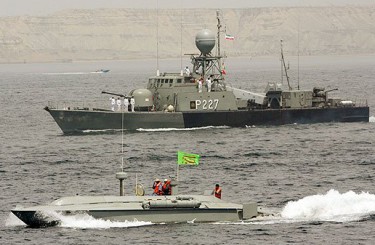
Iran deploys two warships to Mediterranean

Israeli Foreign Minister Avigdor Lieberman on Wednesday called the fact of two Iranian warships heading to the Mediterranean Sea through the Suez Canal a "provocation."
In a speech before the leaders U.S. Jewish organization in Jerusalem, Lieberman said that the two Iranian warships would pass through the Suez Canal overnight and then head to Syria, a country with which Israel is formally at war.
Lieberman referred that the deployment of the warships was "a provocation that proves Iran's nerve and self-esteem is growing from day to day."
According to Israel National News.com, Iran announced it has planned that the warships would be deployed near Israel and dock at a Syrian port for one year.
Iranian news agencies in January announced the beginning of the country's year-long drills that would deploy warships from the Red Sea to the Mediterranean Sea via the Suez Canal.

USS Abraham Lincoln Arrives in Singapore


SINGAPORE (NNS) -- USS Abraham Lincoln (CVN 72) and embarked Carrier Air Wing (CVW) 2 arrived in Singapore, Feb. 16, to enjoy liberty, meet with local professionals and colleagues, and serve the community.

Approximately 5,000 Lincoln and CVW 2 Sailors will visit the island to experience the rich culture and history of one of the world's most thriving nations. 

While in Singapore, Lincoln will host a reception for nearly 400 distinguished visitors. Guests of honor include Republic of Singapore Navy Fleet Commander, Rear Adm. Joseph Leong and U.S. Ambassador to Singapore David Adelman.
"Singapore continues to be one of our strongest strategic partners in Asia and a key contributor to international maritime security; the region is more stable, secure and prosperous than ever thanks to our maritime cooperation efforts," said Rear Adm. Mark Guadagnini, Commander, Abraham Lincoln Strike Group.

During the reception and following days, more than 1,000 visitors are expected to tour the ship, including notable guests from the Singapore Sailing Federation, members of the Republic of Singapore Air Force, numerous international ambassadors, law enforcement officials, and Ms. Singapore 2009 Rachel Kum.

Students from the National University of Singapore's School of Public Policy will also receive a tour and a special presentation on women in leadership roles from Capt. Carol A. Hottenrott, Commander, Destroyer Squadron (DESRON) 9.

While in Singapore, Lincoln Strike Group Sailors will participate in six community service events, including a visit to the Riding for the Disabled Association of Singapore, an organization which provides free, therapeutic horse riding lessons to children and adults with disabilities from all over Singapore. 

"By working together to expand our partnership, Singapore and the United States will continue to foster and enable the conditions for prosperity within the Southeast Asian region, and free use of the sea lanes by all peaceful nations of the world," said Guadagnini.

The Abraham Lincoln Carrier Strike Group is in the U.S. 7th Fleet's area of responsibility as part of a routine deployment to promote peace, cooperation and stability in the region. The ships of Lincoln Strike Group currently reach all corners of 7th Fleet, from the USS Shoup in Australia, to USS Halsey underway near Hong Kong, and USS Cape St. George visiting Phuket, Thailand.

Abraham Lincoln Carrier Strike Group consists of flagship USS Abraham Lincoln (CVN 72), embarked Carrier Air Wing (CVW) 2, San Diego-based guided-missile cruiser USS Cape St. George (CG 71), and the embarked Destroyer Squadron (DESRON) 9. Ships assigned to DESRON 9 include the Everett-based destroyers Momsen (DDG 92) and Shoup (DDG 86), as well as USS Halsey (DDG 97) and USS Sterett (DDG 104).

For more information on Abraham Lincoln Strike Group and the USS Abraham Lincoln, visitwww.facebook.com/usslincoln or http://www.navy.mil/local/cvn72/ 

Wednesday, 16 February 2011

Navy to issue Rs 50,000 crore submarine tender this year


NEW DELHI: The Navy will issue a global tender for procuring six next generation submarines worth over Rs 50,000 crore by the end of this year. 

"The government has cleared Project-75 India which is the next lot of six submarines... At the moment we are going with the Request for Information (RFI) process, I hope within this year we would be able to push off the tender," Navy chief Admiral Nirmal Verma told reporters on the sidelines of a submarine seminar. 

Project-75 India is a follow on of the Scorpene submarine project, six of which are being built by the Mazgaon Dockyards Limited (MDL) under a Rs 20,000 crore deal with French company DCNS. 

With a depleted submarine strength, the Navy is planning to induct over 12 submarines in the next 10-12 years. The plans have also suffered a setback in view of the delays in the construction of the Scorpenes in Mumbai. 
Talking about the capabilities of future submarines, the Navy chief said, "It will be a different boat in the sense that we are revising its Qualitative Requirements. Along with better sensors it will also have better hiding capability, improved detection range and combat management system." 

He said the Navy would go for the Air Independent Propulsion (AIP) systems for the submarines, which would enhance their capability of remaining submerged in water for a longer time period. 

On the weapon systems to be put on the next line of under water vessels, Verma said Navy was planning to use a mix of indigenous torpedoes along with the missiles which are being deployed on the Scorpene submarines. 

To a question on safety of Indian fishermen being targeted by the Sri Lankan Navy, he said, "The issue was highlighted during the visit of the Sri Lankan President also. The joint working group on fisheries is supposed to address these issues and that is the way to resolve it." 

He denied knowledge of any apprehensions expressed by China on India's forthcoming exercises with the navies of the US and Japan. "You have to bear in mind that it is not the first time these exercises are happening. I am not aware of any such apprehension," he said. 

On the annual exercise TROPEX, the Admiral said that besides elements from army and air force, the navy would also include its amphibious elements for the first time in the exercise. 

"TROPEX in terms of involved expenses and platforms is the largest exercise we have. This time we have huge amphibious elements including the participation from army and the air force," he said. 

Indian Navy inducted its first amphibious warship INS Jalashwa from US in 2007.

Tuesday, 15 February 2011

U.S. Navy Destroyer's Mast Breaks Off while the warship was underway off the northern Florida coast

The upper part of the mast on the destroyer Gravely broke off Feb. 13 while the warship was underway off the northern Florida coast, the U.S. Navy has confirmed.
"While underway conducting routine operations Feb. 13, USS Gravely (DDG 107) experienced structural damage to the mast mounted antenna. No personnel were injured during the incident," Cmdr. Elissa Smith, a spokesperson for the Second Fleet in Norfolk, said in a Feb. 15 e-mail to Defense News. "USS Gravely's crews took immediate action and secured the damaged mast-mounted antenna. The cause and extent of the damage is unknown.

"The ship safely returned to Mayport, Fla. at approximately 10 a.m. local yesterday and is undergoing assessment. Commander, U.S. Second Fleet and Commander, Naval Surface Force Atlantic are taking prudent actions to ensure safe, efficient and effective repairs to the ship. Naval Sea Systems Command (NAVSEA) is leading the investigation to identify the root cause of the failure."
The Gravely, a DDG 51 Arleigh Burke-class Aegis destroyer, was built by Northrop Grumman's Ingalls Shipyard in Mississippi and is virtually a new ship, having been commissioned last November.
NAVSEA was unable initially to respond to a question as to whether other ships of the Arleigh Burke class have suffered similar damage. The Gravely is the 57th ship of the class, which remains in production.
"The investigation will determine the root cause of the failure and whether similar conditions exist on other ships of the class," said Alan Baribeau, a NAVSEA spokesman in Washington.
A video production crew from Discovery Channel Canada and Exploration Productions in Toronto was on board the Gravely at the time of the incident, working on an upcoming episode of the Mighty Ships series. A spokesman for the company in Toronto declined to comment on the incident.
Judging from a photo produced online by the Web site coltoncompany.com, the break was clean, coming at a weld joining the uppermost part of the mast to a lower part, just above and behind the URN-25 aircraft navigational beacon. The mast appears to have been kept from falling off completely by the electrical cables running inside.